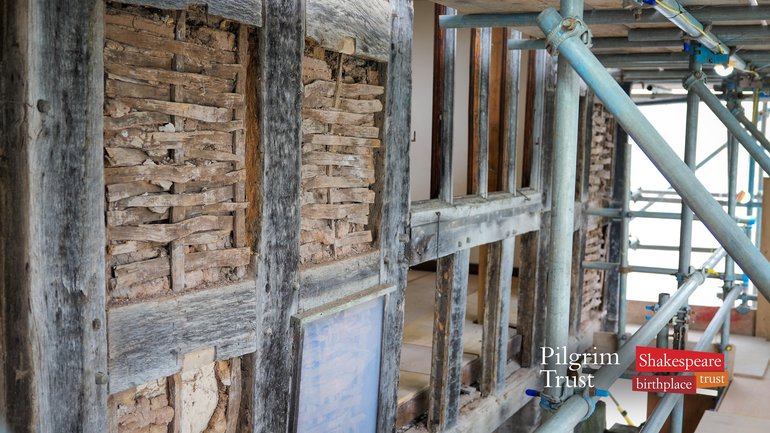

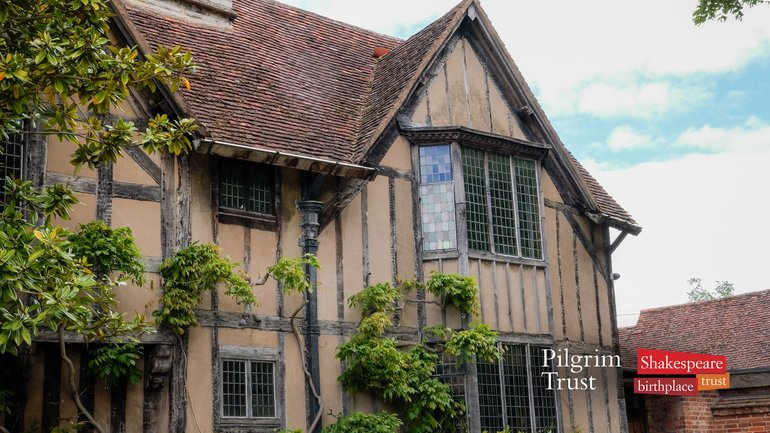
The grant will fund the replacement of failed infill panels within the Grade I listed timber-framed building using traditional materials and conservation techniques, helping to protect its historic fabric and improve its long-term resilience.
Hall's Croft, the former home of Shakespeare's daughter Susanna Hall and her husband, the physician Dr John Hall, is currently undergoing a major programme of conservation. The Pilgrim Trust's support will fund work taking place between August and October 2026, helping complete the current phase of repairs to the north-east and north-west elevations and enabling SBT to progress towards future work on the south-east and south-west elevations as part of its wider multi-million-pound A House for All Time campaign.
Sue Bowers MBE, Director, the Pilgrim Trust, said:
"Hall's Croft is a building of exceptional historic significance and an important part of our shared cultural heritage. We are pleased to support the Shakespeare Birthplace Trust in delivering carefully considered conservation that will protect the building's historic fabric using traditional skills and materials. Investing in projects like this helps ensure that nationally important heritage can continue to be understood, enjoyed and cared for by future generations."
Rachael North, Chief Executive of the Shakespeare Birthplace Trust, said:
"We are extremely grateful to the Pilgrim Trust for this generous support and delighted to receive our first award from this significant UK heritage funder. Hall's Croft is one of the country's most important historic houses, and this grant enables a vital stage of its conservation while helping secure its future for generations to come. It also represents an important milestone in our A House for All Time campaign as we continue to develop Hall's Croft as a place that inspires curiosity, creativity and connection."
Mark Ratcliffe, Head of Estates at the Shakespeare Birthplace Trust, said:
"This grant enables us to complete an important phase of specialist conservation work, replacing failed infill panels using traditional materials and techniques appropriate to this Grade I listed building. These repairs are essential to protecting the historic timber frame and securing the building's long-term future."