
- Heritage should be treated as civic infrastructure, with strategic authorities encouraged to use heritage assets as growth drivers and integrated into planning and regeneration by councils.
- Heritage sector valued at £15.32bn, with £1 of GVA by the heritage sector creating an additional £1.93 in wider economy and local wellbeing rated at £29bn.
- What’s Past is Prologue addresses the loss of specialist conservation officers in local government, a lack of traditional building and conservation skills and a complex and fragmented funding landscape.
The Shakespeare Birthplace Trust, the home of Shakespeare for the World, has welcomed a major report from independent think tank Localis that seeks to reframe heritage as civic infrastructure, operating as a strategic driver for local growth and fostering pride in place.
What’s Past is Prologue redefines heritage as dynamic civic infrastructure that can drive long-term economic resilience, local wealth retention and community wellbeing.
England’s heritage sector is valued at £15.32bn, slightly exceeding the domestic sports sector. £1 of direct Gross Value Added (GVA) by the heritage sector creates an additional £1.93 in the wider UK economy. The wellbeing value for people living near heritage sites is £29bn annually.
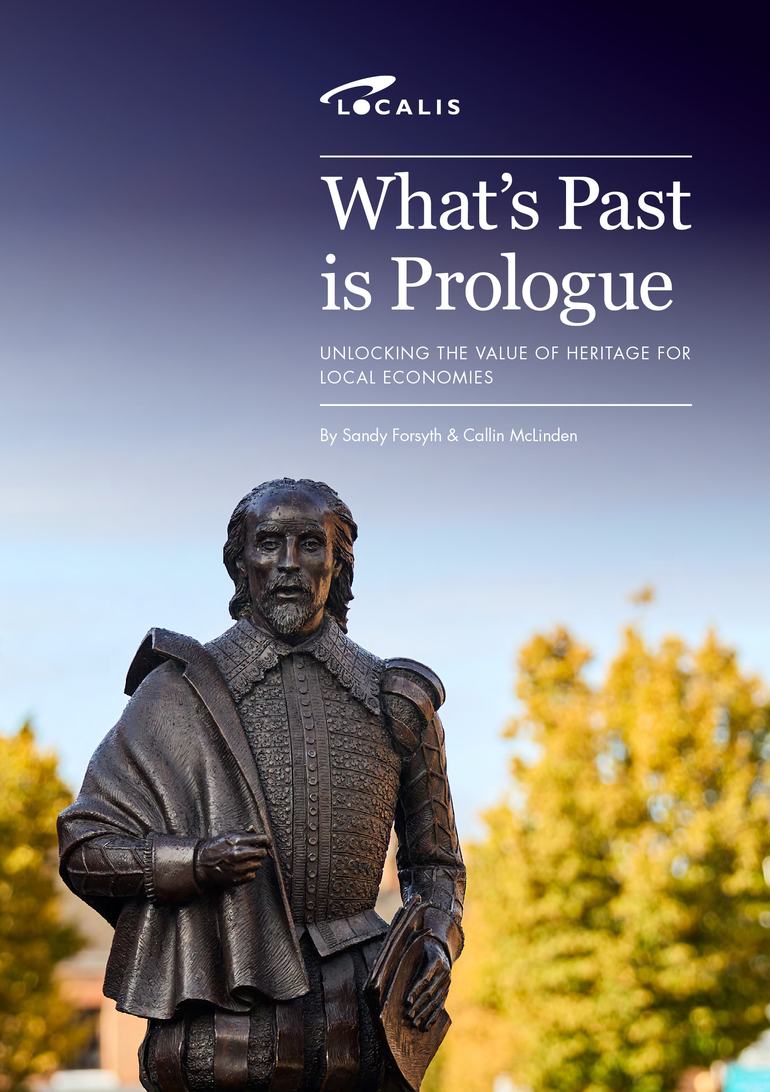
The report – subtitled Unlocking the Value of Heritage for Local Economies - calls on central government to ensure tangible and intangible heritage are recognised in national place policy, and across areas such as infrastructure, regeneration and community ownership. It says strategic authorities and metro mayors should include heritage explicitly in local growth plans, spatial strategies, investment frameworks and Integrated Settlement Outcomes.
It adds that local authorities should identify where historic buildings can support adaptive reuse, housing need, public realm improvements, biodiversity, community use and town centre renewal.
The report was commissioned with the support of Stratford-upon-Avon District Council and the Shakespeare Birthplace Trust. More than twenty leading figures in the heritage sector contributed to What’s Past is Prologue which also drew on more than 200 sources.
Rachael North, chief executive of the Shakespeare Birthplace Trust, which is the oldest heritage conservation charity in the UK, commented:
“This is a timely report from Localis just as the new Prime Minister, Andy Burnham MP, settles into Number 10. In his speech at the People’s History Museum, Mr Burnham outlined his commitment to radical devolution and ‘good growth in every postcode.’
“What’s Past is Prologue shows how heritage can be reimagined as civic infrastructure and, with appropriate alignment and investment, can be central to growth and wellbeing strategies.”

In her Foreword to the report, Rachael wrote:
“‘What’s Past is Prologue’ invites us to imagine a future in which heritage is valued as more than the preservation of buildings and the curation of stories.
“This thoughtful exploration encourages us to see heritage as both a strategic asset and enabling infrastructure: one that can drive economic growth while also strengthening wellbeing, social prosperity and a shared pride in place.
“The value of real, embedded community participation is something those of us working in heritage have known and felt for a long time but it’s important to see it set out as a necessary imperative, rather than a tokenistic nice to have.”
Among the policy recommendations from Localis are:
- Additional Green Book guidance: the publication of heritage-specific HM Treasury Green Book guidance to properly value community culture and historical assets during procurement.
- Mandatory integration: embedding heritage strategies directly into regional and mayoral Local Growth Plans to ensure preservation and economic development run parallel.
- Local SME empowerment: reforming local procurement models to protect regional retrofit supply chains, prioritizing adaptive reuse of existing historic structures over carbon-heavy demolition where appropriate.
- Grassroots ownership: giving communities direct levers for genuine grassroots stewardship to restore local identity and civic pride.
Tony Perks, deputy chief executive, Stratford on Avon District Council, said:
“Stratford-upon-Avon is blessed with a rich heritage. As the birthplace of William Shakespeare, Stratford has an international reputation and attracts significant visitor numbers every year.
“A well-presented, coherent heritage offer has enormous potential to achieve good things, it can enhance health and wellbeing, provide fulfilment and employment, create a sense of ‘pride in place’.
“As Stratford embarks on the next stage of its heritage journey, this independent research provides a framework around which great ideas can be developed.”
Localis head of research, Callin McLinden, said:
“This report is grounded in a broad research process, drawing on interviews, an excellent roundtable and extensive source material from across local government, heritage, culture, academia, funding and place-based practice. Heritage is a complex policy issue because it cuts across so many other areas – particularly when considered alongside matters of economic development.
“Our aim was to therefore respect this complexity while distilling it into practical recommendations for all tiers of governance towards holistic, heritage-led growth.”
Rachael added:
“Thank you to the research team at Localis, to all the contributors and to our partner Stratford-upon-Avon District Council for supporting this important study. We look forward to working with council, strategic authority and heritage body partners to take forward recommendations in What’s Past is Prologue.”
ENDS
For further information please contact [email protected].
The full report can be found at: www.localis.org.uk/wp-content/uploads/2026/07/Localis-Whats-Past-is-Prologue-A5-Report-July2026-PRF01a.pdf